
Why The Soil Is The Real Story
Much of Thousand Oaks and the wider Conejo Valley sits on expansive clay soil - ground that swells noticeably when it absorbs moisture during the area's wetter winter months and contracts again through the long dry summer. That seasonal expansion and contraction isn't just a landscaping inconvenience. It puts real, repeated mechanical stress on anything buried in it, including the copper or galvanized supply lines running under a home's slab foundation.
Homes on sloped lots see this effect even more pronounced, since soil movement on a slope isn't uniform - one part of the foundation can shift slightly more than another over time, adding uneven stress to the pipe runs beneath it. That unevenness is exactly why two homes built the same year on different lots nearby can have very different real-world risk profiles.
How This Actually Causes A Leak
A pipe that's rigid and fixed in place doesn't handle repeated soil movement well over years. Small amounts of flex at a joint, or friction against the surrounding slab material as the ground shifts, gradually wear a weak point into the pipe - eventually resulting in a pinhole leak.
This is a slow, cumulative process, which is part of why slab leaks often show up in homes that are decades old rather than new construction, even when the pipe material itself was reasonably good quality when installed.
Copper, the most common material in mid-century and later construction, resists this stress better than the galvanized steel that came before it and is the standard material required under California Plumbing Code (UPC-based) for most residential supply lines, but even copper isn't immune to decades of repeated seasonal movement in genuinely expansive soil.
That's a real distinction worth understanding: this isn't primarily a story about bad pipe material, it's a story about what any buried metal pipe experiences under sustained, cyclical ground movement over a long enough timeline.
What This Means Practically
If you own an older home in this area, particularly one on a sloped lot, a slab leak isn't a freak occurrence - it's a genuinely more likely event over the life of the home than it would be in a market with more stable, uniform soil.
That's not a reason to worry constantly, but it is a reason to take early signs seriously: a warm patch on the floor, water pooling near the edge of the slab, or an unexplained rise in your water bill worth checking with a proper leak detection visit first.
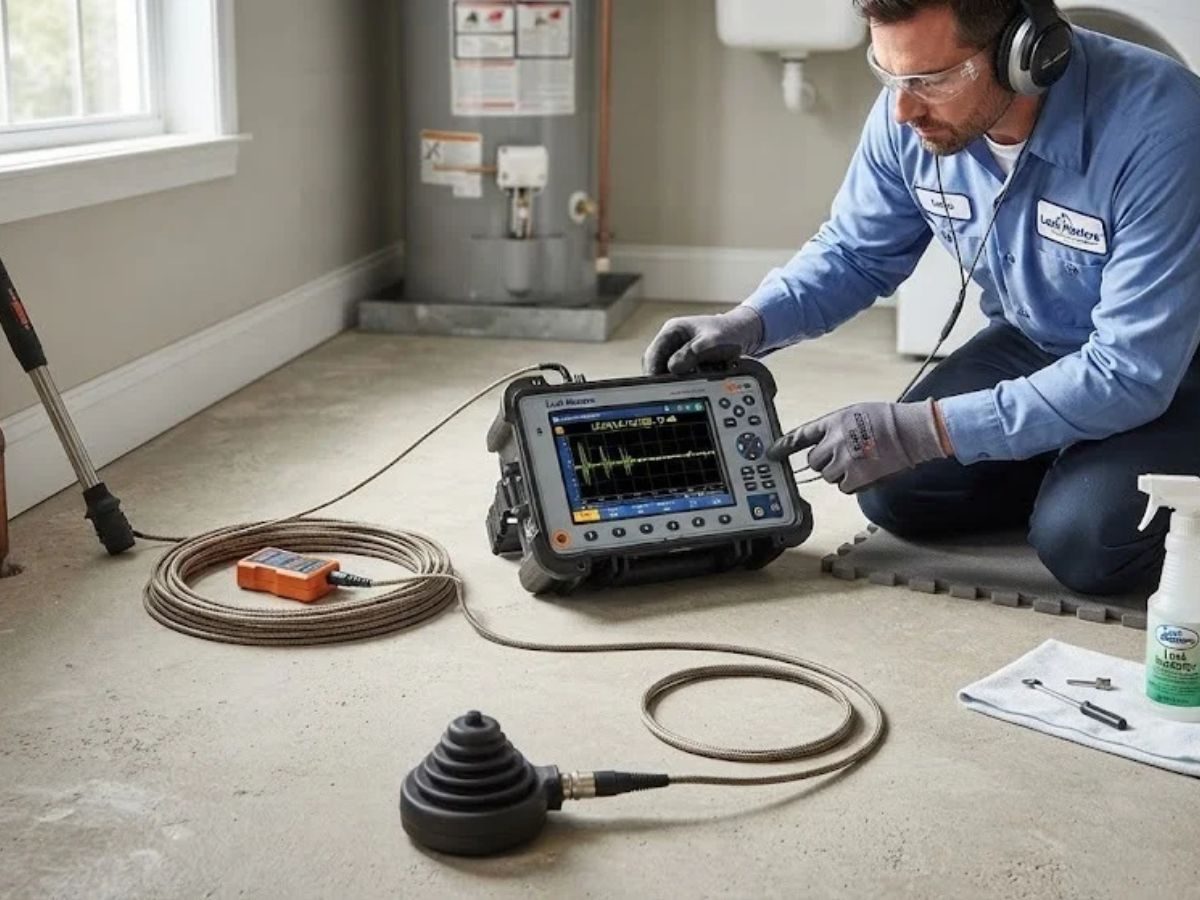
Slab leak detection uses acoustic and electronic equipment specifically to locate the leak precisely before any concrete comes up, which matters more in this kind of market than a flatter one, since guessing wrong means breaking into ground that's already under stress from the same soil movement that caused the leak.
Is There Anything You Can Do Proactively?
Not much changes the soil itself, but knowing your home's risk profile helps. Older homes with original copper or galvanized supply lines, especially on sloped lots, are the highest-risk category. If you've already had one slab leak, that's a meaningful signal the rest of the supply system is under the same stress and may be worth a broader conversation about whether a full repipe makes sense rather than treating each future leak as an isolated event.
What Homeowners And Buyers Can Reasonably Ask About
If you're buying a home in this area, asking about the age and material of the supply lines, and whether the home has any prior slab leak history, is a genuinely useful question - not a paranoid one, given how real this risk pattern is locally. A seller's disclosure sometimes covers this, but it's also reasonable to ask directly or have it checked as part of a broader inspection.
For homeowners already in a house with known older piping, the honest approach is to stay alert to the early signs rather than either ignoring the risk or assuming every home in the area is imminently at risk. Most homes go years or decades without an issue - this is about probability shifting somewhat higher than a flatter market, not a certainty for any individual property.
The Bottom Line For This Market
None of this means every Thousand Oaks homeowner needs to panic about slab leaks. It means the risk here is genuinely tied to real, identifiable factors - soil type, lot slope, pipe age and material - rather than random bad luck, and knowing which of those apply to your specific home is more useful than either dismissing the risk entirely or assuming the worst.
If you're not sure how your home stacks up on those factors, a straightforward conversation about the home's age, pipe material, and lot slope is usually enough to get a realistic sense of relative risk, well before anything actually goes wrong.
Slab Leaks In Thousand Oaks: Provider Side And Permit Questions
Four water purveyors serve the Conejo Valley, so if your meter is spinning, check your bill to see which one serves you. The City of Thousand Oaks Building Division also lists repair or replacement of gas, water or sewer lines among its permit types, so ask any contractor how a slab leak repair or reroute will be permitted. Source: City of Thousand Oaks water providers page (toaks.gov/waterproviders) and City of Thousand Oaks Building Division (toaks.gov/building).
We locate the leak first, then explain whether a spot repair or a reroute makes more sense.
Related services: slab leak detection and repair and leak detection. We also serve homeowners in Oak Park and Agoura Hills.