
Emergency Slab Leak Response: Stop The Water First
Water seeping up through the floor, a hot spot that appeared overnight, or the sound of running water under the house is a slab leak emergency. A pressurized line under the slab keeps pushing water into the soil and the concrete, which can undermine flooring and send the water bill up within days.
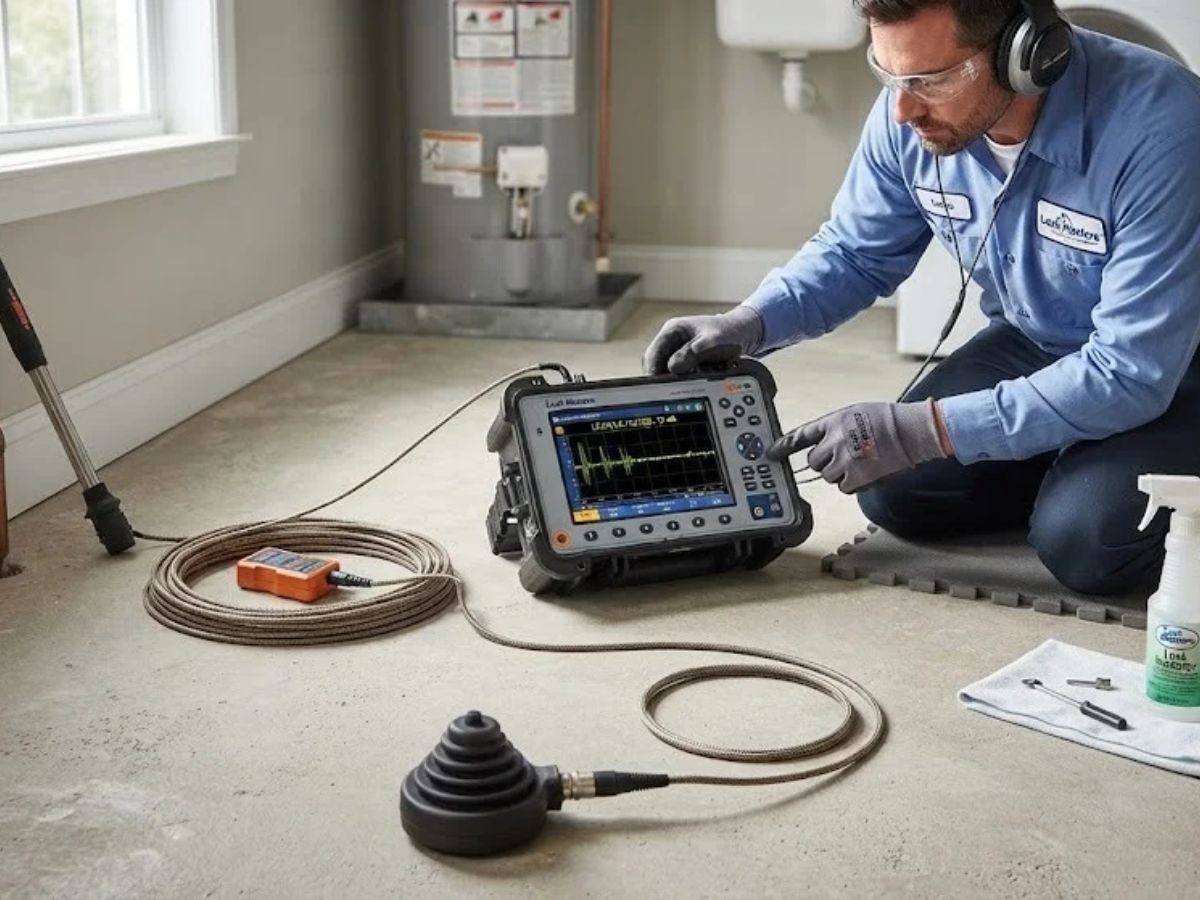
Close the main shutoff and call our 24/7 line. Once the supply is off, we use acoustic listening equipment to pinpoint the leak before any concrete is cut. Please do not break into the slab yourself, because gas, electrical and other water lines can sit close to the one that is leaking.
Close the main water valve to stop the leak from running while you wait.
Wet tile and laminate get slippery and soaked flooring can lift. Move rugs and furniture out of the area.
Take photos of the wet spot and the meter before cleanup. They help detection and any insurance claim.
Describe where the water or warm spot is and we will line up detection as soon as we can reach you.
What A Slab Leak Involves
Why Slab Leaks Happen Here
Much of Thousand Oaks and the wider Conejo Valley sits on expansive clay soil that swells when wet and contracts in the long dry summer, and homes on sloped lots see that movement even more.
That soil movement puts real mechanical stress on the copper or galvanized supply lines running under a slab foundation, and over years it's a genuine contributor to the pinhole leaks and joint failures that show up as slab leaks in this area - not just a generic aging-pipe story.
The signs vary: a warm spot on the floor (from a leaking hot water line), water pooling at the edge of the slab near a garage or foundation line, an unexplained spike in the water bill, or the sound of running water when every fixture is off.
Slab Leak Risk By Neighborhood
Slab leaks are more likely where homes sit on slopes and expansive clay soil, which describes parts of Conejo Oaks, North Ranch, Lang Ranch, and Wildwood. If your house is in one of those areas, a warm spot on the floor or a jump in the water bill is worth a same-day detection visit before the damage spreads.
Finding It Before Opening Anything Up
We use acoustic listening equipment and electronic line tracing to narrow the leak's location to a small, specific area of the slab before any concrete comes up. This matters because a slab leak repair done without proper detection means guessing where to break concrete, sometimes multiple times, which is far more disruptive and expensive than getting it right the first time.
Repair Options: Spot Repair Vs. Reroute
Once located, there are usually two paths: a direct spot repair, accessing the specific section of pipe through the slab and repairing or replacing that segment, or a reroute, running new supply line through the attic or along an exterior wall to bypass the damaged slab section entirely rather than breaking concrete at all.
Which makes sense depends on the pipe's overall condition, its age, and whether this is an isolated failure or a sign of broader corrosion throughout the home's supply lines - we'll walk through both honestly rather than defaulting to whichever is more profitable. Every repair follows California Plumbing Code (UPC-based) requirements for slab penetration, pipe material, and pressure testing before the area is closed back up.
What To Do Before We Arrive
If you can locate the main shutoff valve, turning it off stops the leak from continuing to run while you wait, especially important if the leak is on the hot side and a water heater is actively trying to reheat lost water.
Do not attempt to open the slab yourself to inspect or access the leak - without proper detection equipment, that risks cutting into the wrong section of pipe or other buried utility lines, and makes accurate detection harder once concrete has already been disturbed.
A Note On Multiple Leaks
Copper supply lines that have started failing in one spot due to age or soil-movement stress sometimes fail again elsewhere within a year or two, especially in homes with the same pipe material and installation age throughout. If this is your second slab leak in a relatively short period, that's worth a broader conversation about a full repipe rather than treating each leak as a fully isolated event.
Water Coming Up Through Floors Or Driveway Concrete
Slab leaks do not always announce themselves with a warm floor. Callers describe water seeping up through a bedroom slab, a damp edge along the garage, or a wet patch on a concrete driveway where a supply line crosses underneath. All of these point to a pressurized line leaking below the surface.
When a line runs under a driveway or walkway, we locate the leak first and cut only the section of concrete needed to reach the pipe. Where a reroute through the attic or an exterior wall makes more sense than breaking concrete, we lay out both options and the cost difference before choosing. We can also complete the repair after detection, so you do not have to hire a second company.