
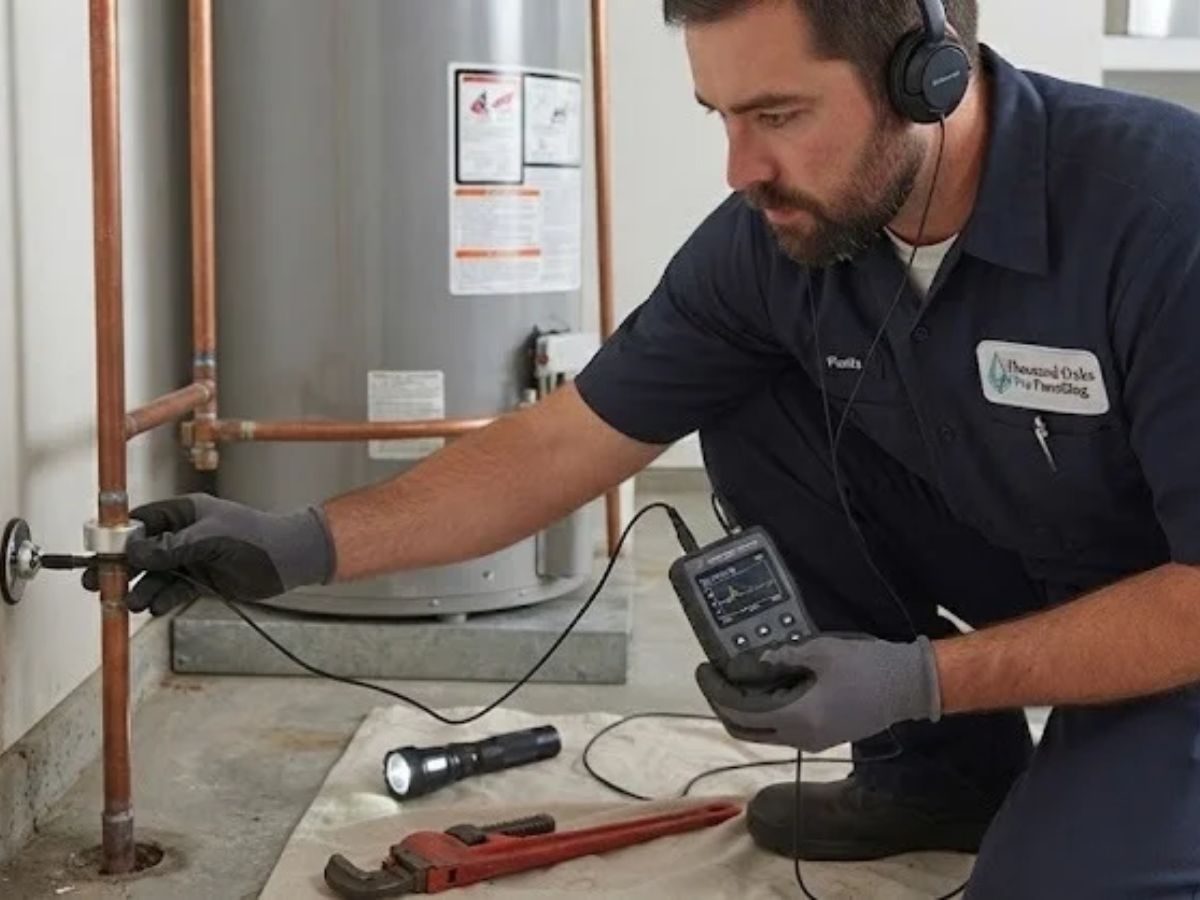
When A Leak Cannot Wait: Emergency Leak Detection
Some leaks cannot wait for a scheduled visit. Water coming through a ceiling, a meter that spins fast with every fixture off, or a wet spot spreading across a floor all call for a plumber the same day, and our 24/7 emergency line exists for exactly that.
Start by closing the main shutoff valve to stop the water, then call us at (714) 750-8637. With the water off, a technician can use electronic listening gear and moisture meters to find the source without opening walls at random. If you are not sure where your shutoff is, say so on the call and we will talk you through finding it.
Close the main water valve, often near the meter or where the line enters the house, to stop the flow.
Move furniture and electronics away from the wet spot and put towels or a bucket under active drips.
If water is near outlets or the panel, stay out of the wet area and only switch off breakers you can reach on dry footing.
Tell us where the water showed up and what the meter is doing so we can plan the right detection method before we arrive.
How Leak Detection Works
When You Don't Know Where The Leak Is
Most leak detection calls start the same way: something is clearly wrong, but nobody can see where. The water bill went up and the water company says the meter is still turning even with everything in the house off. There's a warm or damp spot on the floor that doesn't match any fixture nearby. A ceiling or wall has a stain that keeps coming back after it dries.
None of these tell you where the actual leak is on their own, which is exactly why guessing at a repair before finding the source wastes money and sometimes makes the damage worse.
We start with a real diagnostic process, not a guess: acoustic listening equipment to trace the sound of pressurized water moving through pipe, pressure testing to isolate which line or zone is losing water, and a check of the meter itself to confirm whether the leak is on the house side or the utility side of the connection.
Leak Calls By Neighborhood
Homes on the slopes near Boney Mountain in Dos Vientos Ranch and around Wildwood often sit on ground that shifts with the seasons, which can stress buried supply lines over time. In flatter areas near The Oaks mall and Janss Marketplace, leaks are more often tied to age than to soil, so we ask where you live before deciding which detection method to start with.
What The Diagnostic Actually Involves
For a suspected slab or underground leak, we use ground microphones and electronic listening devices to pinpoint the leak's location within a small, workable area before any concrete or flooring comes up - the equipment is what lets us avoid tearing up an entire floor to find a leak that's actually in one specific spot.
For a wall or ceiling leak, we combine visual inspection with moisture meters and, where needed, thermal imaging to trace water that has traveled from its actual source before showing up somewhere else.
If the water bill is the only symptom and nothing is visibly wet anywhere, we start at the meter: shutting off the house's main valve and watching whether the meter continues to turn tells us within minutes whether there's an active leak on the property at all, before any invasive equipment comes out.
After We Find It
Once the leak is located, we give you a straight answer on what's actually involved in the repair - a copper pipe with a pinhole leak on an easily accessible run is a different job than a leak under a slab foundation, and the price and access method should reflect that real difference, not a generic flat number.
If the leak turns out to be a slab leak specifically, see Slab Leak Detection & Repair for what that repair path looks like.
All repair work follows California Plumbing Code (UPC-based) standards for pipe material, joint method, and access requirements, whether the repair ends up being a simple fitting swap or a full section replacement.
Water Company Leaks Versus House-Side Leaks
It's worth knowing the line between what's your responsibility and what isn't: the water utility generally owns and maintains the line up to the meter, while everything from the meter into the house is the homeowner's.
A meter test that shows the leak is on the utility side is worth reporting to the water company directly rather than paying for a private repair on a line that isn't yours to fix - we'll tell you clearly which side of that line the leak falls on once we've tested it.
Meter Running With Everything Off? A Five-Minute Check
A running meter is the most common reason people call us, and you can confirm it yourself before the visit. Turn off every fixture and appliance that uses water, including the ice maker and the irrigation system. Then find your water meter and look at the leak indicator or low-flow dial if it has one. If it keeps moving, water is leaving your system somewhere.
Write down the meter reading, wait 30 minutes without using any water, and read it again. A changed number points to a leak. A still meter with a climbing bill usually means water is being used somewhere unexpected, such as an irrigation zone or a toilet that runs.
The City of Thousand Oaks is one of several water providers in the Conejo Valley, along with California Water Service, California American Water and Camrosa Water District, so check your bill to see who serves your address. If a high bill matches what the meter shows, book a diagnostic and we will find the source. Source: City of Thousand Oaks water providers page.
Irrigation, Yard And Meter-Box Leaks
Outdoor leaks often hide in plain sight. A patch of green weeds above a buried line, a soggy spot near the street, or an irrigation valve that runs fast when it opens are the usual clues. Many of these sit on the line between the meter and the house or in the sprinkler system, which is the homeowner's side.
Water pooling right at the meter box can be a different story. Ask your water provider where its responsibility ends and yours begins, because the meter box and the line to the house can sit on different sides of that line. We tell you whether the leak is on the house side after a pressure and meter test, so you know who to call before paying for a private repair.
Ceiling Stains, Wall Leaks And Crawlspaces
A brown ring on the ceiling, a bubbling wall or damp insulation under the house means water has been moving for a while. The stain is rarely directly under the leak, because water travels along framing and pipes before it shows. A bathroom above a stained dining room ceiling is a common pairing, and a failed drain or shower pan can be as likely a cause as a supply line.
We use moisture meters and pressure tests to trace the wet area back to its source and to separate a supply leak from a drain leak. Houses with crawlspaces get a look underneath too, since a slow leak there can soak the subfloor and insulation for months before anyone notices.
When The Pipe Itself Has Cracked Or Burst
Detection is only half the job when a pipe has split. Burst copper, a cracked PVC fitting or a failed galvanized section can all show up as sudden, heavy water, and callers often tell us the line was fine yesterday.
Once the leak is located, we repair the damaged section, replace the failed fitting or, if the surrounding pipe is just as worn, talk through a larger replacement. A single repair on sound pipe is a very different job from a corroded line that will fail again, and we explain which one you have before any work starts. If the leak turns out to be under the concrete, see our slab leak detection and repair page.