
Repair Or Replace, Explained
Humming But Not Turning
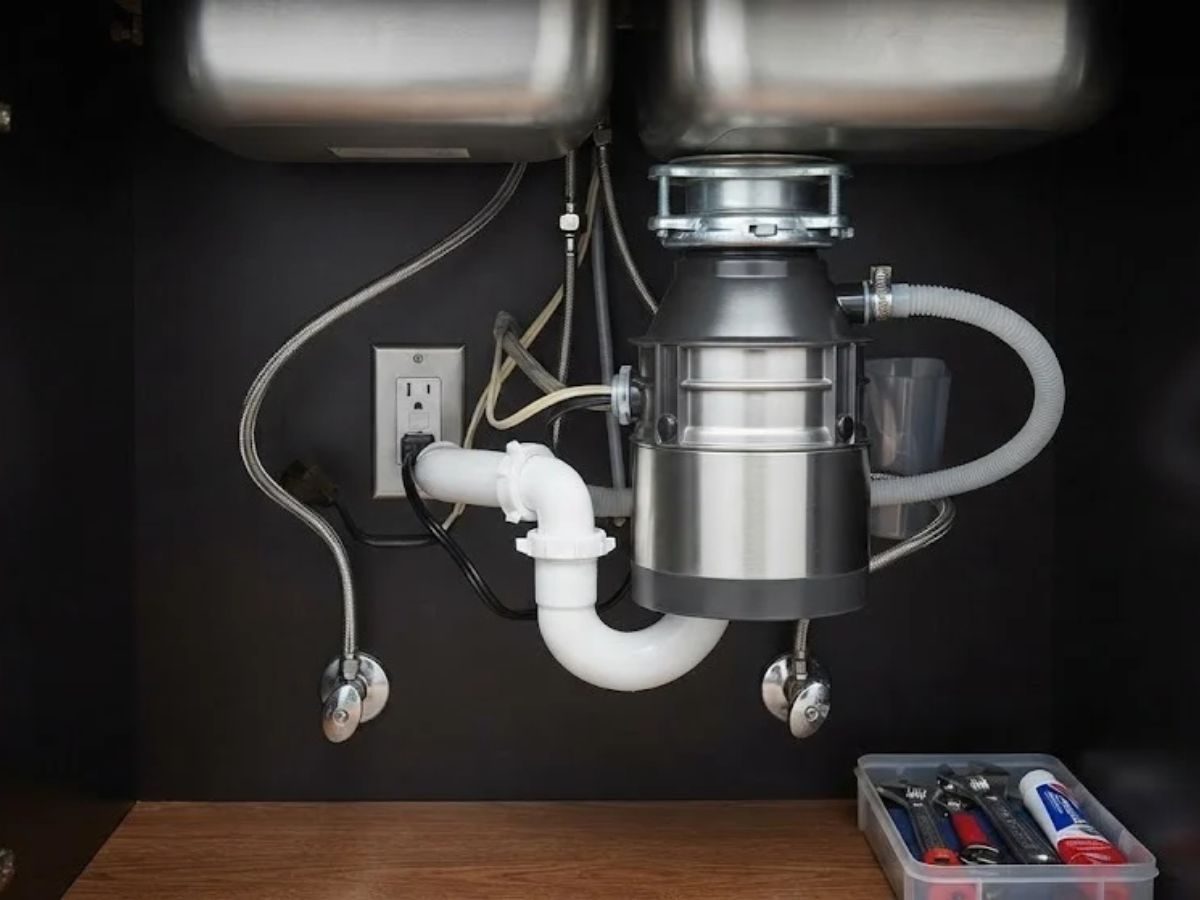
A disposal that hums but doesn't spin is usually jammed, not electrically dead - something is physically stuck against the impeller. Most units have a reset button on the underside and an Allen-wrench port for manually freeing a jam. If you're comfortable and the power is off, that's worth trying first. If it still won't turn after a reset and a manual clear, the motor itself may have failed, which typically means replacement rather than repair on most residential units.
Disposal Calls In Condos And Houses
Kitchens in the Hillcrest Drive condos and in Lang Ranch homes have very different sink setups, from compact single bowls to double sinks with dishwasher connections. We check the electrical connection and the drain connection on every install, because the right unit depends on the sink and the circuit and not just the horsepower.
Leaks Underneath The Sink
A disposal leaking water is almost always leaking from one of three points: the sink flange seal at the top, the connection to the dishwasher drain line, or a crack in the unit body itself. The first two are repairable. A cracked body means replacement. We check all three rather than assuming, since tightening a fitting won't fix a cracked housing and vice versa.
New Installation
Installing a new disposal includes removing the old unit, fitting the new sink flange and seal, reconnecting the dishwasher drain line if applicable, and testing under load before we call it done. If you're upgrading to a higher-horsepower unit, we'll also check that your existing outlet and switch wiring actually support it rather than assuming a straight swap. Installation follows National Electrical Code (NEC) requirements for the dedicated circuit and switch wiring alongside California Plumbing Code (UPC-based) drain connection standards.
Choosing The Right Horsepower
Most residential kitchens do fine with a 1/2 to 3/4 horsepower unit, but a household that regularly processes fibrous scraps, coffee grounds, or larger volumes of food waste benefits from a 3/4 to 1 horsepower model with more grinding power and a quieter sound-insulated housing. Going bigger than you need mostly buys quieter operation and headroom for heavier use, not a fundamentally different outcome for typical kitchen scraps.
What Not To Put Down A Disposal
Fibrous vegetables like celery, onion skins, coffee grounds in large quantities, grease, and hard items like fruit pits are the most common causes of a jam or a premature failure, even on a well-maintained unit. Running cold water for a few seconds before and after use helps flush waste through fully rather than letting it settle and cause future jams.
A Word On DIY Disposal Repair
Beyond a manual reset and clearing an obvious jam with the Allen wrench, we'd steer most homeowners away from attempting disposal repairs themselves - the units combine sharp impellers, standing water, and household electrical wiring in a tight space, and a mistake there is a worse outcome than the cost of a service call. If a reset and manual clear doesn't get it spinning again, that's the point to call rather than continue troubleshooting.
A Persistent Smell From The Disposal
A lingering odor even after running the unit with cold water usually means trapped food debris under the splash guard or in the grind chamber that normal use isn't clearing. Running ice cubes with a little rock salt through the disposal can dislodge some buildup, but a persistent smell that doesn't respond to that is worth a service look, since it sometimes points to a slow leak or drain-line issue behind the smell rather than just the disposal itself.
Disposal Backing Up Into The Other Side Of The Sink
When the disposal side of a double sink fills with water that came from the other basin or from the dishwasher, the blockage is usually past the disposal, in the shared drain or the dishwasher connection. Running the disposal harder will not fix it.
We check the disposal outlet, the dishwasher drain hose connection and the trap, then clear the line beyond. If grease is the cause, we explain what to keep out of the sink so it does not return.